

Two modes
In classic, the snake passes through the edge and comes back on the other side. In obstacles mode walls are deadly, but shields, shrinks and bonus gifts appear on the field.

Pixel Snake
For anyone who remembers Snake, on iPhone and iPad
A quick pixel-art round: a classic mode where you pass through walls, and an obstacles mode with shields, shrinks and gifts.
iPhone and iPad · iOS 17 or later · paid game
One minute in a queue or half an hour in the evening — a round starts with a single tap.
In classic, the snake passes through the edge and comes back on the other side. In obstacles mode walls are deadly, but shields, shrinks and bonus gifts appear on the field.
Rewards for first steps and serious records, a local high-score table and a shared Game Center leaderboard.
Swipes or on-screen buttons, your own obstacle style, widgets with your streak, and “Quick Game” and “Best Score” actions for Siri and Shortcuts.
Classic with no walls, or a field with obstacles and power-ups.
Every apple is a point and a segment. The snake grows and speeds up.
Earn achievements and compare scores in Game Center.
A pixel font, a big grid and no extra screens between you and the game.
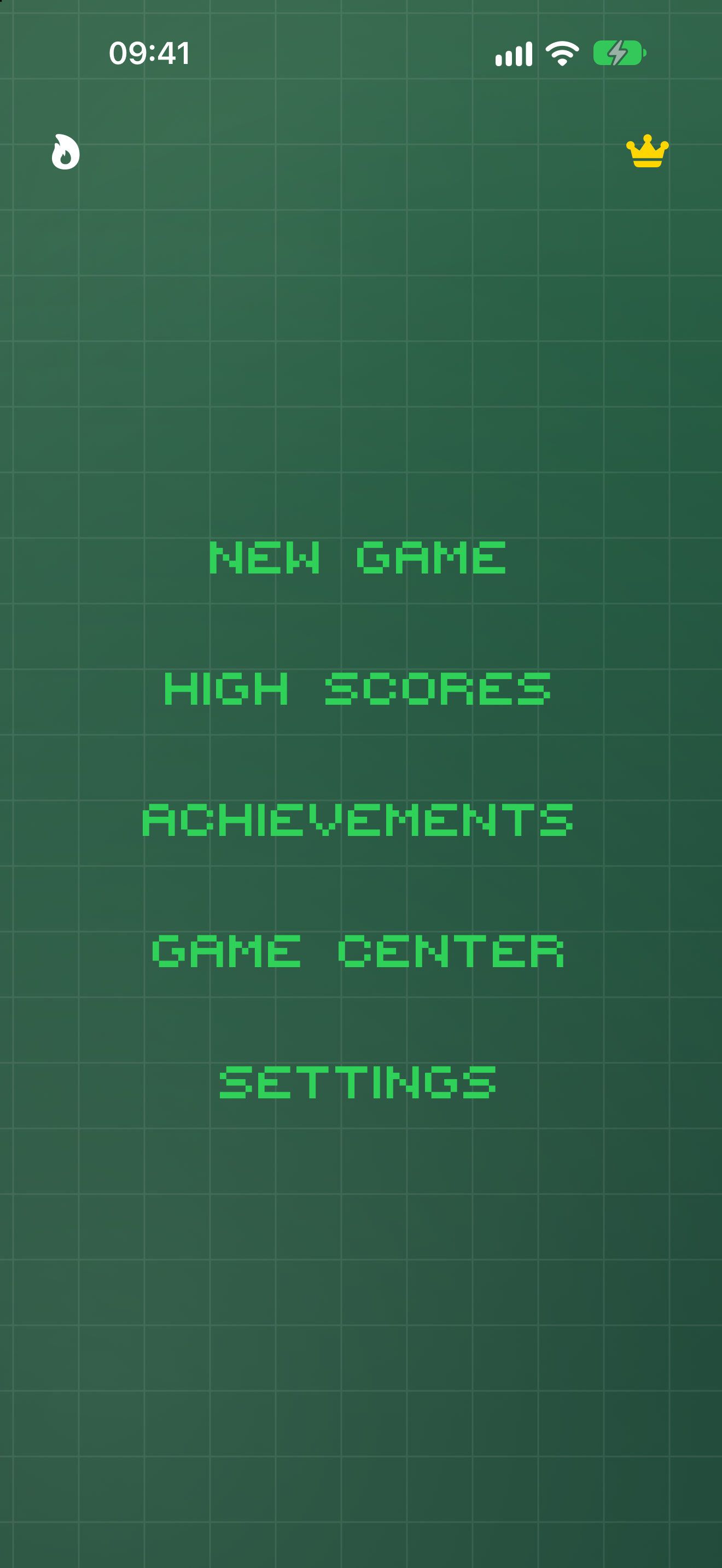
iPhone · menu
One tap to play
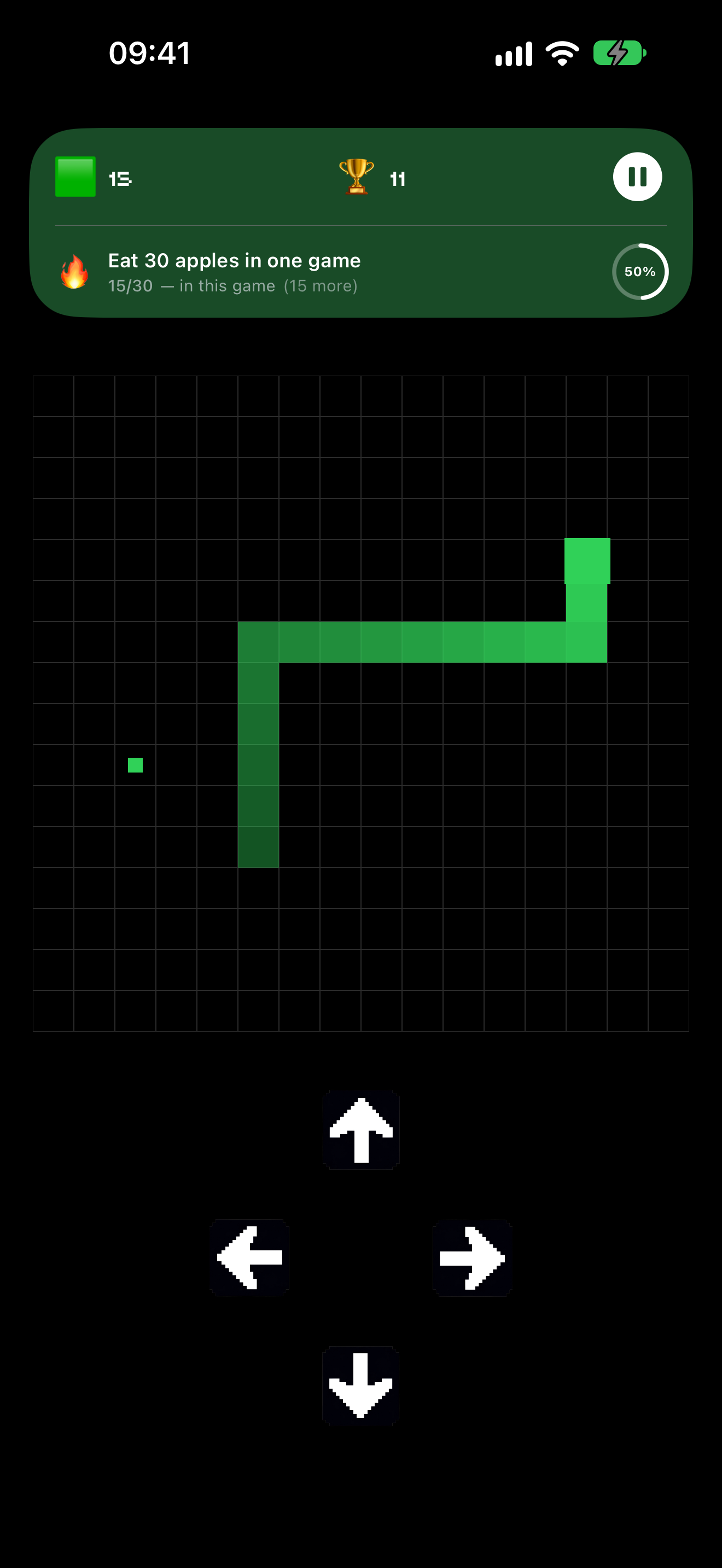
iPhone · classic
Challenges as you play
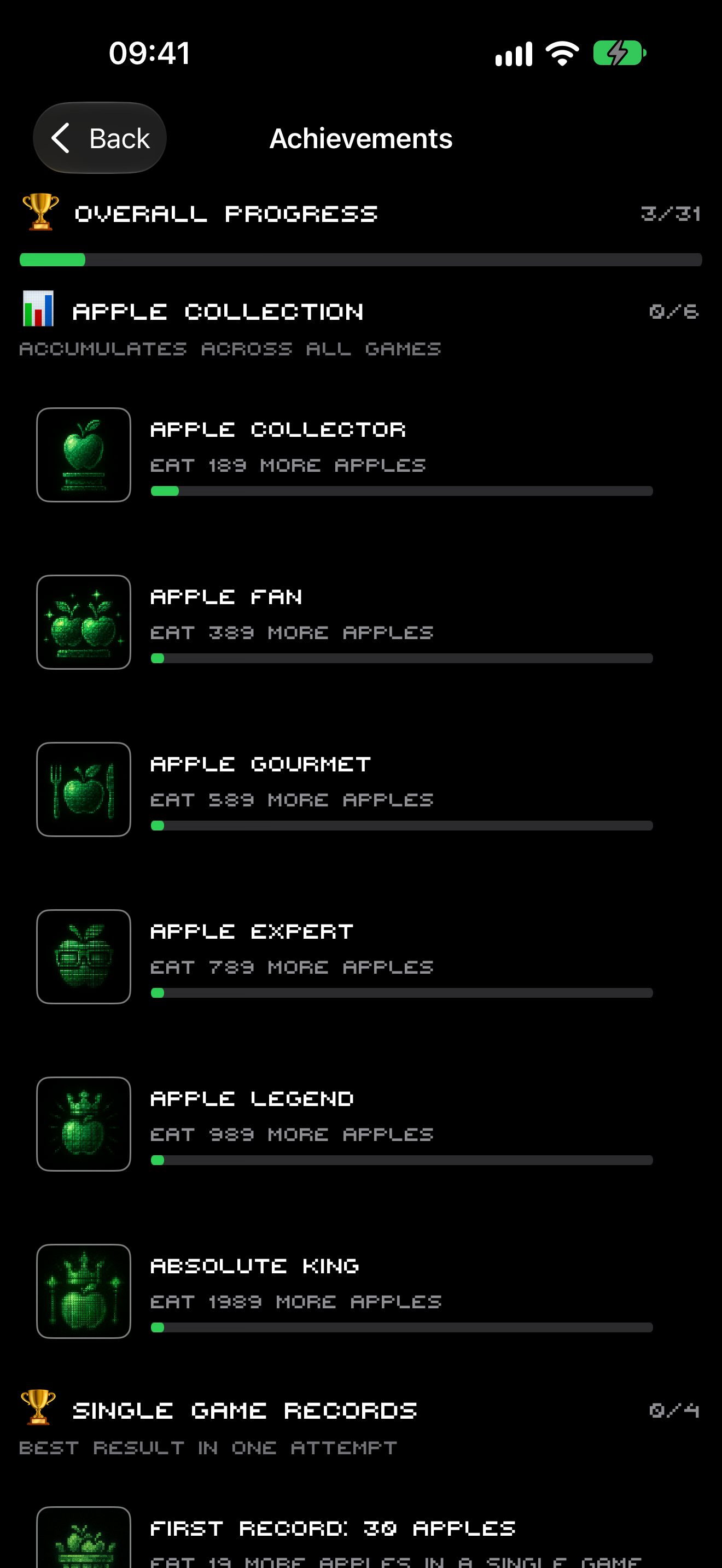
iPhone · achievements
Achievement progress
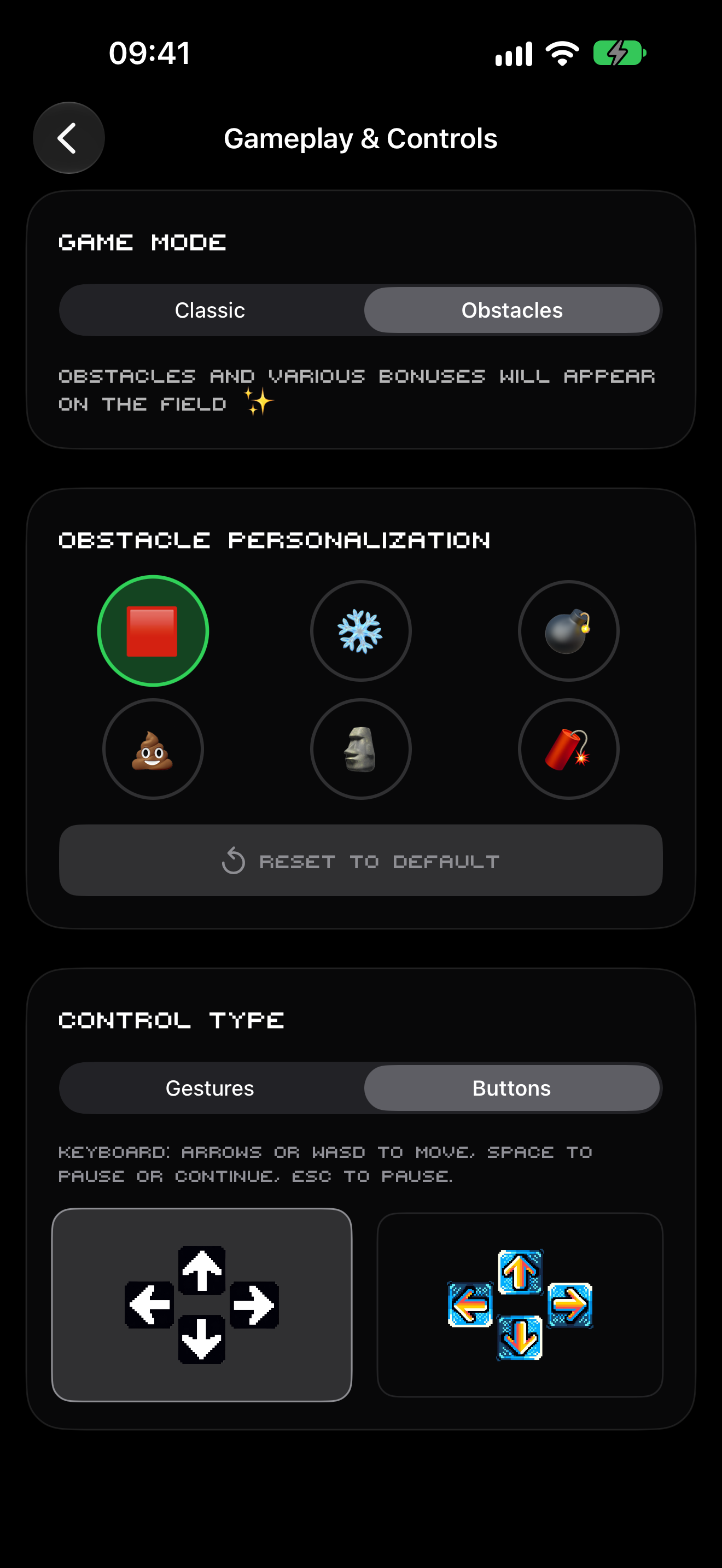
iPhone · settings
Mode, obstacles, controls
Pixel Snake is a paid game. Gold Status is a separate purchase and does not affect gameplay.
Current price shown on the App Store
Separate one-time in-app purchase
Gold Status is optional: both modes and all achievements come with the game.
Press right → up → left quickly between two ticks and a snake can turn into itself. The reverse check compares with the last step actually executed, not the last tap.
Shield, shrink and gifts run on their own timers. The timers survive pause and backgrounding and never leak into the next round.
The grid size follows the device: 14 or 16 cells on iPhone, 24 or 28 on iPad. On iPad the game works in every orientation.
Every fix is pinned with tests: 89 unit tests cover input, collisions and power-up timers.